La Latteria
Menu
register
  1. About
  2. What We Do
  3. Shop
  4. Foodservice
  5. Contact Us
Sign in

What We Do

  • Our Products
  • The Art of Making Mozzarella
PREVIOUS NEXT

Early Morning: Rise & Shine

The production cycle normally starts very early morning (often in the middle of the night) when our milk arrives from the farm. Our artisan will check, test and pasteurize the milk.

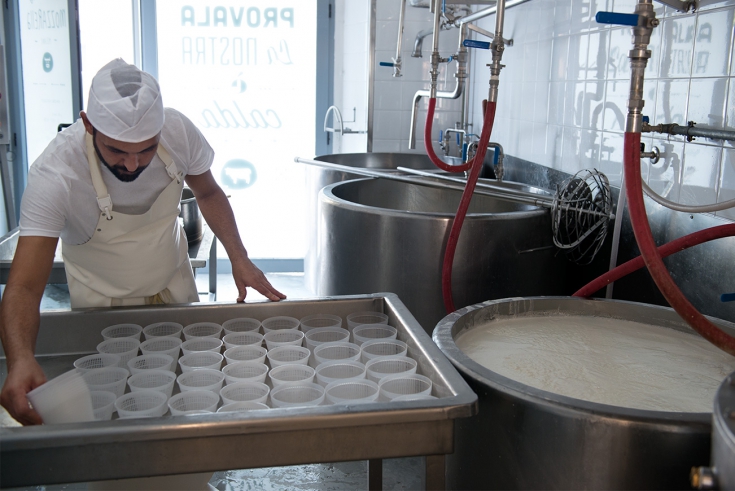
Once the preparation work has been completed, he can finally open the taps allowing the milk to flow into large cheese vats. Then slowly and mildly the milk is steamed, like a giant warm cappuccino.
Acidification and Coagulation

A starter is added to initiate the coagulation process. This enzyme will activate microorganisms that keep the production cycles alive in a kind of “life goes on” metaphor. A small mistake at this point can cause hours of delay in production.

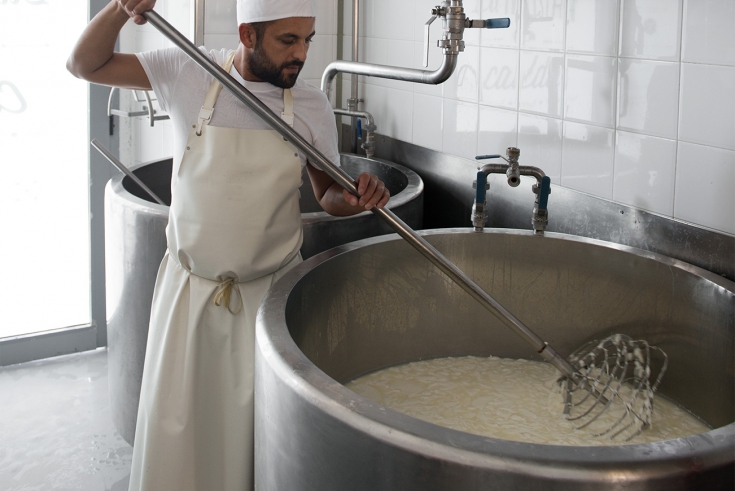
The entire mixture is stirred very quickly with a huge perforated spoon. Half an hour later, the surface of each tub becomes a compacted and shiny white mass, which must be broken up with large whisk (“frangi cagliata”). Deciding when the curd is ready to be strung is crucial: waiting too long will result in a mushy cheese; stringing too early can result in a tough dry cheese.

Breaking of the curd

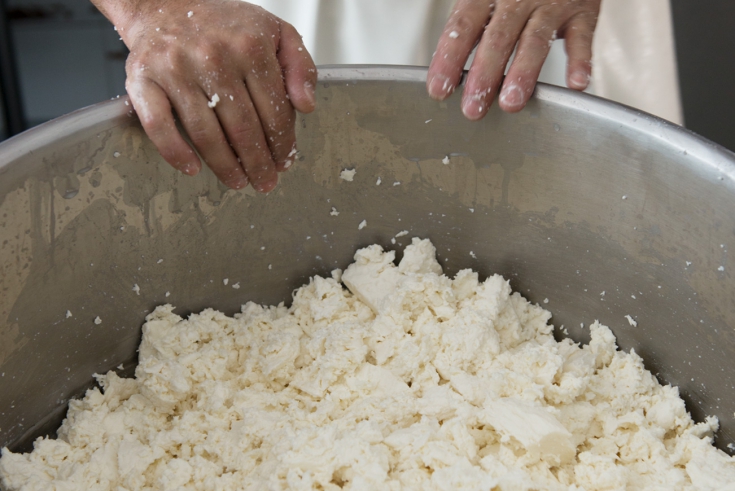
The cheese makers take turns breaking up the compacted mass into a myriad of small pieces with the frangi-cagliata; this operation requires skill, rapidity and a great deal of strength. There are only a few places, like La Latteria, where this work is still done by hand; in most places, a mechanical tool is used. After the mass is broken up, it must rest for a few minutes so that all the pieces of cheese are allowed to settle at the bottom of the tub.

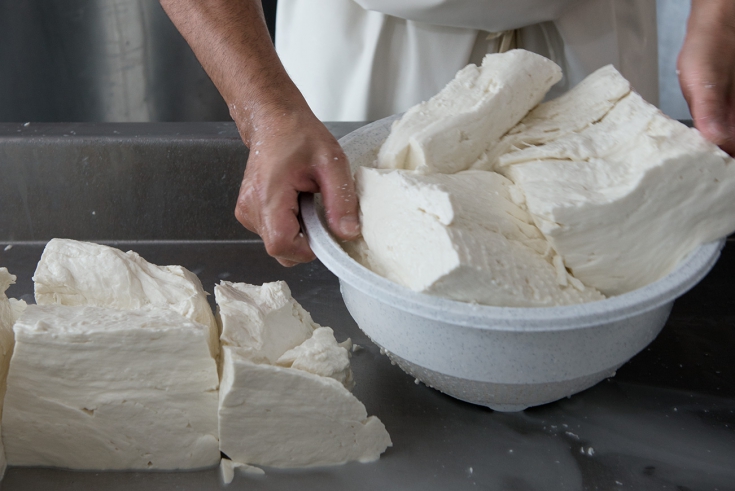
Then the whey is manually removed with buckets and poured in another vat for the preparation of ricotta. What is left in the tub is the curd (“Cagliata”) that looks like an enormous white pie.

Ripening and draining of the curd

Now it’s time for the cheese maker to test the cagliata and make sure it has ripened to the perfect point for the spinning. With a knife-like instrument, the cheese master pulls out a bit of cagliata and dips it into hot water to see how it reacts. If the cheese melts and stretches as it should, he gives the OK for the final phase to begin.

The cheese is divided into big pieces and placed on a steel table, where it will continue to drain, while waiting to be stretched (“filato”).

Kneading and Salting

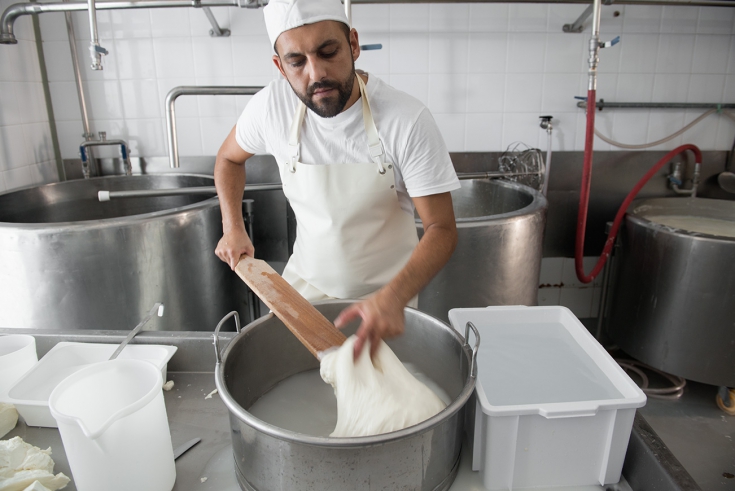
Few pieces of curd are placed in the traditional barrel (“Mastello”) and boiling water is poured into the barrel where the soon-to-be mozzarella is quickly mixed again with a long sturdy wooden stick (“Stecca”).

Spinning

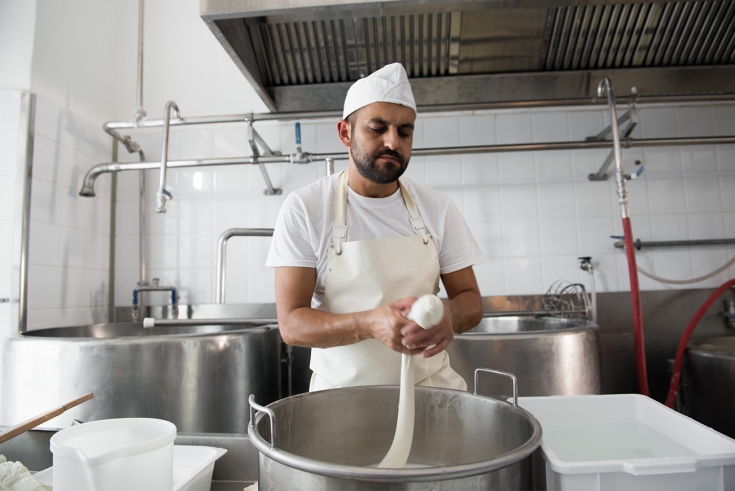
This is the last stage of production and requires very expert hands because it must be done very rapidly: with skillful movements of both hands, the cheese maker lifts and pulls the melted mass with the stecca, stretches and squeezes the paste.

Shaping

Then using his/her thumbs and indexes, he/she cuts off (“mozza” means “to cut”) the cheese into balls (“campagnola” and “bocconcini”) or entwines the mozzarella to give it the traditional “nodini” (knots) or “treccia” (braid) shape. Immediately thereafter, the final product is immersed in cooling trolleys filled with cold water, from where it’s packaged and dispatched to final customers.

Making Ricotta

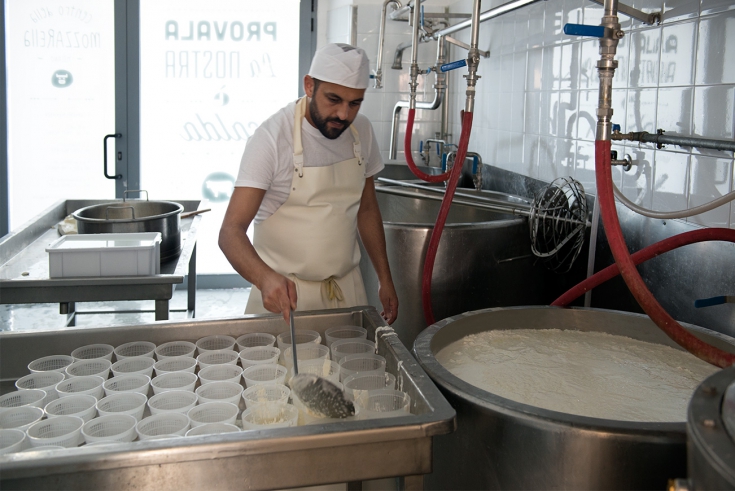
After the breaking of the curd, the whey is manually removed with buckets and poured in another vat for the preparation of ricotta. The whey is re-heated to a near-boiling temperature, with addition of milk and an acidifier. Half an hour later, snowy, fluffy flakes of ricotta, will start surfacing in the boiling vat. The casaro will manually scoop them up with a skimmer and gently put them in the traditional container (“fuscella”). This is a very lengthy process which takes hours, emphasizing the dedication of our artisans and the true meaning of craftsmanship.

>TOP
  • Delivery
  • FAQS
  • Privacy Policy
  • Terms & Conditions

© La Latteria 2026

  •  
  •  
  •  

Photography by Francesca Moscheni